The Three Most Common Pitfalls of Culture Change

After more than ten years’ experience facilitating and advising on culture transformation programs, I have identified three common pitfalls that trap most executives during the change process. My purpose in this article is to discuss how these pitfalls emerge and suggest three concrete solutions that could help to avoid them…
A Courageous Culture Needs Courageous Executive Officers. CXO, You Got This!
Courage is a team sport. How will you help your organization become the kind of culture that is even more courageous, adaptive and agile?
Culture Shift Series #2: Personal and Organizational Transformation Go Hand in Hand

Over the past 10 years, I have worked in organizational change, leadership and team development, and raising consciousness. Early on, my work focused more heavily on changing processes and systems with less emphasis on personal transformation. The thinking was if we can get these systems in place and get people to buy in and adopt them, then the change will be successful. What I noticed with this approach was a lack of sustainability in the results, so I evolved my focus to the interconnection and interdependence between personal and organizational transformation, which is the human dimension of business.
Culture Shift Series: FROM Toxic — Defensive and Reactive — TO Constructive and Creative

How do you know if your workplace culture is toxic? These are three warning signs your workplace culture might be toxic and how to begin a detox.
Change is a Chronic Condition

Change isn’t another problem for us to fix, a challenge to beat or a phase to get past. Change is a persistent, unstoppable, chronic condition that we will always have to live with and embrace – good news – we already have everything we need to be successful, adaptable and unstoppable in the face of change.
Change/innovation is Easier When…We See That Our Current Level of Expertise Has a Short Shelf Life

Change is easier when…we can see our knower mindset not knowing a thing. In successful corporations, we value knowledge “knowledge is power,” as they say.
Seven Conscious Project Management Capabilities for Today’s “New Normal”

Times have changed. The last 20 years have brought as much change as the previous 50 years combined. This increasingly rapid change has created new challenges for today’s modern enterprise. Do you feel it? This new context or “new normal” is characterized by something experts have come to call, “Living in a VUCA world.” LIVING […]
Change (Innovation) is Hard. Relative to What?
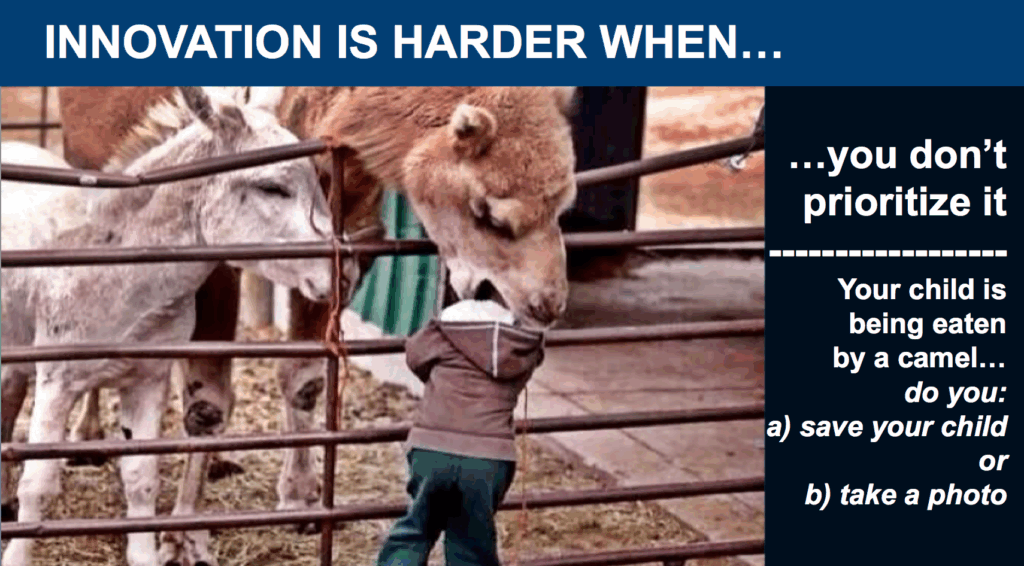
“Change is hard.” Is it?
What if that’s just an opinion disguised as a fact? What if that is just a socialized complaint/expression that we’ve all been brainwashed into believing and repeating?
Shifting from Unilateral Control to Mutual Learning
by Fred Kofman The unilateral control model The world of American business operates under a set of mental models. Chris Argyris and Don Schön call it “Model I”; Diana Smith and Robert Putnam refer to it as the “unilateral control model.” This model has been the guiding philosophy that has shaped the code of acceptable […]